
Key Features & Anatomy
-
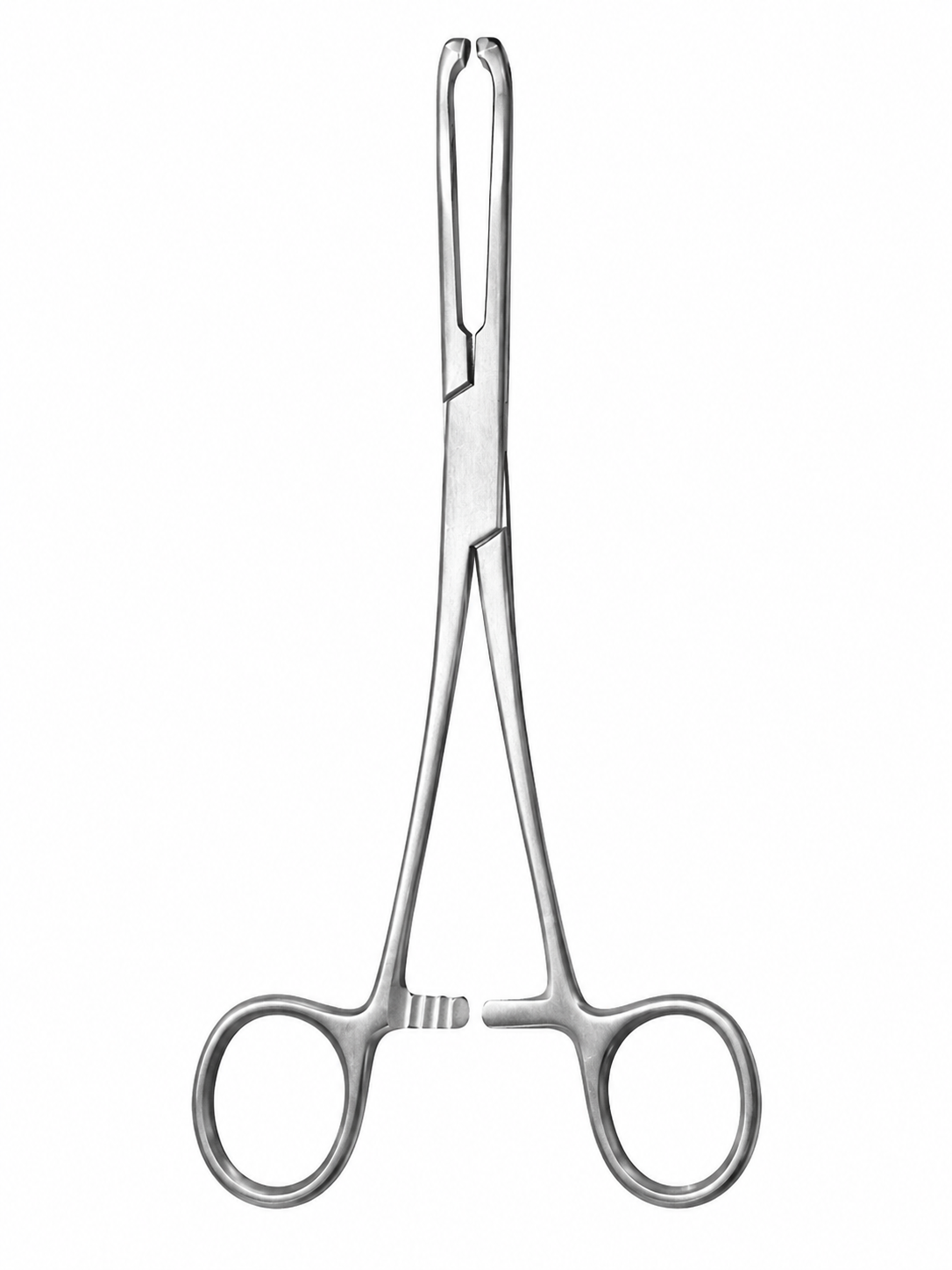
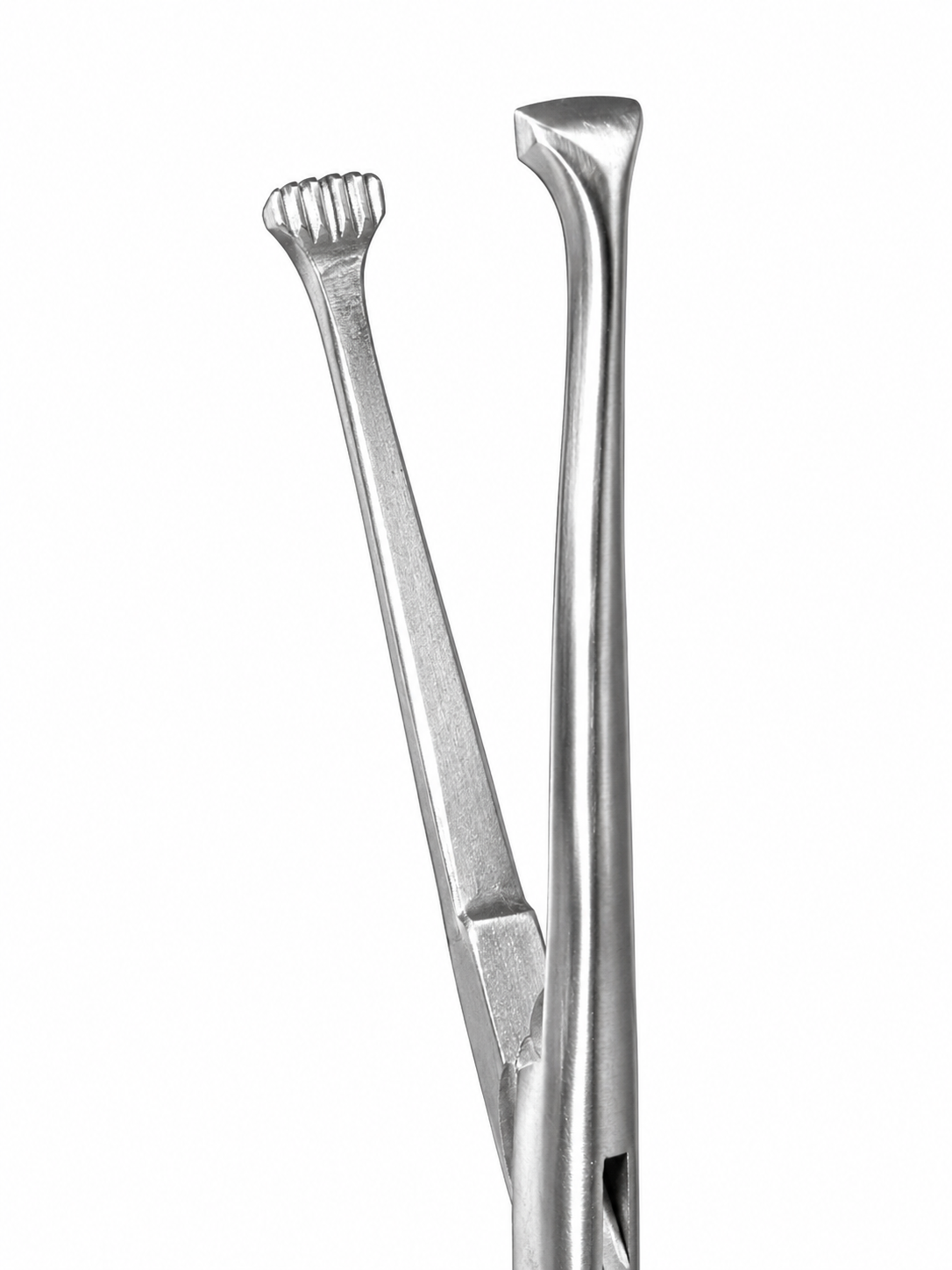
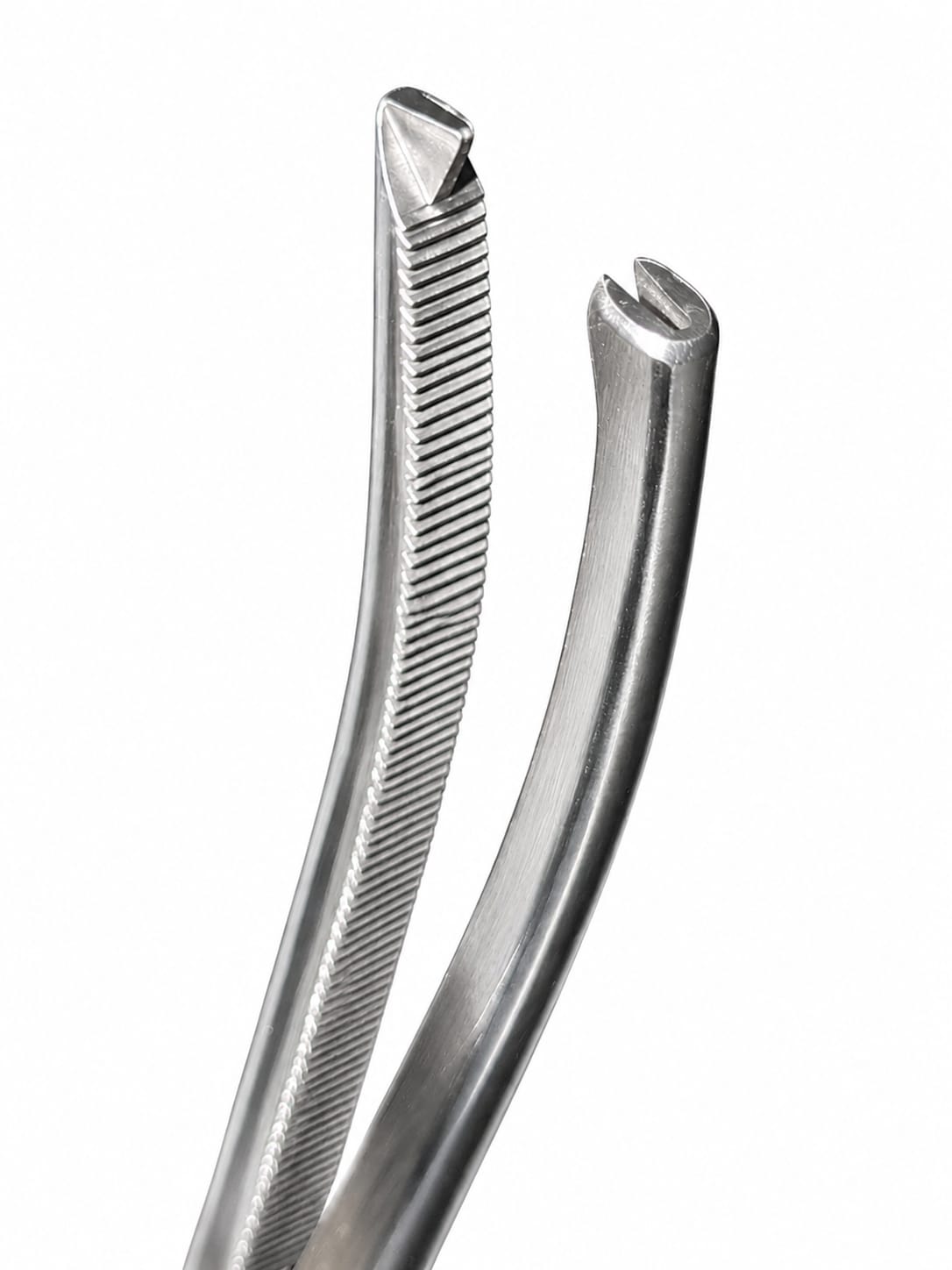
Interlocking Teeth: The defining characteristic is at the very tips of the jaws, which curve inward and feature a row of tiny, interlocking teeth (commonly in a 4×5 or 5×6 configuration).
-
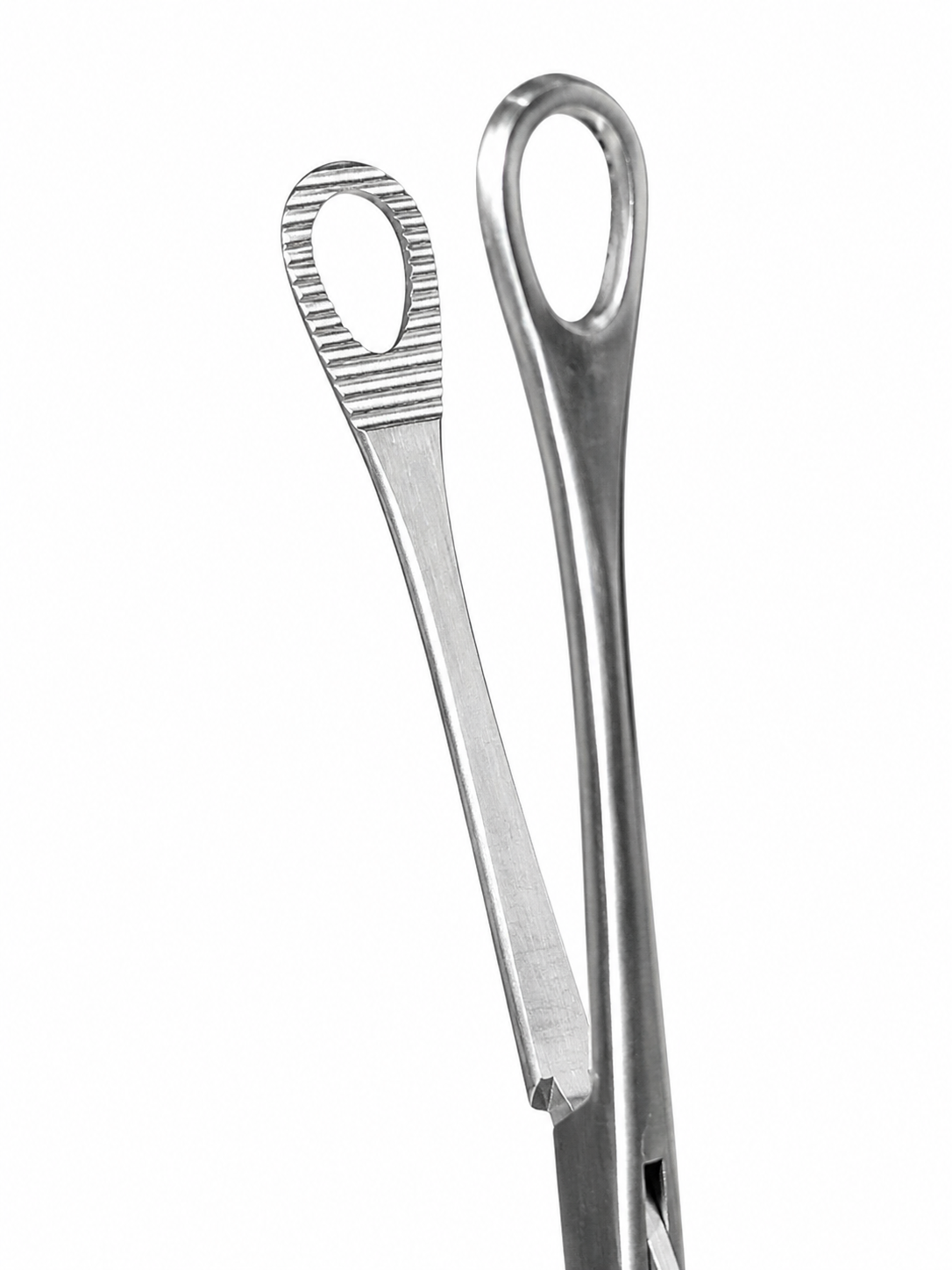
Hollow/Gapped Jaws: As seen in the image, the blades do not meet along their entire length. Instead, they form a parallel gap when closed, ensuring that pressure is focused strictly at the interlocking tips rather than crushing the tissue trapped in between.
-
Ratchet Locking Mechanism: Located just above the finger rings, this multi-step lock allows the surgeon to clamp the tool onto tissue and maintain a secure hold without continuous manual pressure.
Primary Uses
The Allis forceps is designed to firmly grasp, lift, and retract slippery or dense structures during a procedure.
-
Dense Tissue Manipulation: Ideal for holding tough tissues like fascia, muscle sheaths, tendons, scar tissue, or skin margins.
-
Tissue Excision: Frequently used to grip tumors, cysts, or organs (such as the gallbladder or breast tissue) that are being completely removed from the body.
-
Surgical Prep: Occasionally used to hold drapes or suction tubing in place within the sterile field.
⚠️ Clinical Note: Because of its sharp, interlocking teeth, the Allis forceps is classified as a traumatic or semi-traumatic instrument. It can cause localized tissue damage or puncturing, meaning it is strictly avoided on delicate, highly vascularized internal structures like the intestines, bladder wall, or major blood vessels (where a non-traumatic tool like a Babcock or DeBakey forceps is used instead).

Reviews
There are no reviews yet.